LTE (Long Term Evolution) is a 4G wireless broadband technology that delivers high-speed data, low latency, and reliable cellular connectivity.
LTE technology powers smartphones, routers, industrial IoT devices, vehicles, medical equipment, and mission-critical infrastructure worldwide.
Although 5G is expanding, LTE networks remain the global backbone of cellular connectivity, supporting billions of devices across consumer, enterprise, and industrial environments.
This guide covers:
LTE stands for Long Term Evolution.
LTE is a wireless communication standard developed by the 3rd Generation Partnership Project (3GPP) to improve mobile broadband performance over 3G networks. LTE is commonly referred to as 4G LTE, although technically LTE is the foundation of 4G wireless technology.
Simple Definition of LTE
LTE is a 4G cellular technology that provides faster data speeds, lower latency, and improved network efficiency compared to 3G.
 When Long-Term Evolution (LTE) was first introduced in 2008, it defined a new cellular access network with high spectral efficiency, high peak data rates, short round trip time as well as flexibility in frequency and bandwidth.
It signifies an evolving level of performance as the capabilities of cellular hardware, software and network technology — such as speed, latency, battery usage and cost efficiency — are optimized and improved over time. As one industry observer noted about LTE, “It isn’t as much a technology as it is the path followed to achieve 4G speeds.”
It is important to know that as succeeding generations of cellular technology are introduced, previous generation(s) will remain in service, often coexisting for a decade or more with the newer technology.
At Digi, we are focused on the commercial and industrial use cases of 4G LTE and 5G, as our customers are distributed across the enterprise, industrial, transportation, government and medical landscapes. So the remainder of this article is devoted to the discussion of the LTE meaning and outlook in that context.
What Is a 4G LTE Network?
A 4G LTE network is a high-speed cellular network built on an all-IP (Internet Protocol) architecture. Unlike earlier 2G and 3G systems, LTE technology eliminates circuit-switched components and delivers data entirely over packet-based infrastructure.
Key components of an LTE network include:
- E-UTRAN (Evolved Universal Terrestrial Radio Access Network)
- eNodeB base stations
- Evolved Packet Core (EPC)
- LTE antennas and radio equipment
This simplified LTE network architecture enables:
- Higher data throughput
- Reduced latency
- Improved spectrum efficiency
- Better scalability for IoT and enterprise deployments
 LTE works by using advanced radio technologies to transmit data more efficiently across cellular spectrum bands.
LTE Technology Features
LTE uses:
- OFDM (Orthogonal Frequency Division Multiplexing) for downlink transmission
- MIMO (Multiple Input, Multiple Output) antennas
- Adaptive modulation and coding
- All-IP packet switching
These LTE features allow:
- Faster download and upload speeds
- Lower latency than 3G
- Improved reliability
- Stronger signal performance
Step-by-Step: How LTE Connectivity Happens
- A device connects to a nearby LTE cell tower (eNodeB).
- The LTE network authenticates the device.
- Data is transmitted via the Evolved Packet Core.
- Information is routed across the internet or private networks.
This streamlined LTE architecture reduces delays and improves overall network performance.
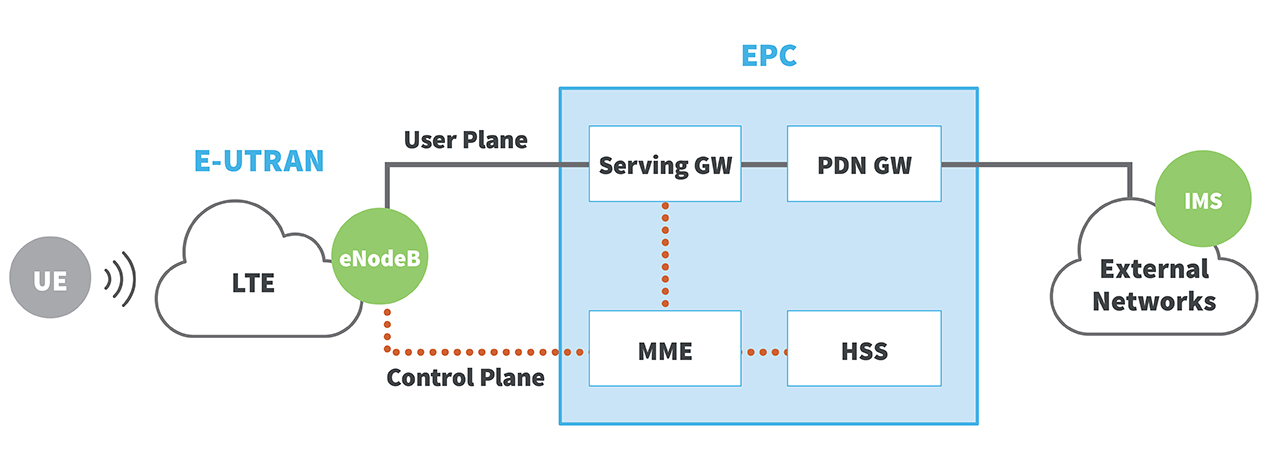
Source: 3GPP
Typical LTE speeds vary depending on carrier, spectrum, signal strength, and congestion.
- Download speeds: 5 Mbps to 100+ Mbps
- Upload speeds: 2 Mbps to 50 Mbps
- Latency: 20–50 milliseconds
Advanced versions such as LTE Advanced (LTE-A) support even higher throughput through carrier aggregation and enhanced MIMO.
While 5G offers higher peak speeds, LTE performance remains more than sufficient for most:
- IoT applications
- Industrial monitoring
- Smart city deployments
- Video streaming
- Remote asset tracking
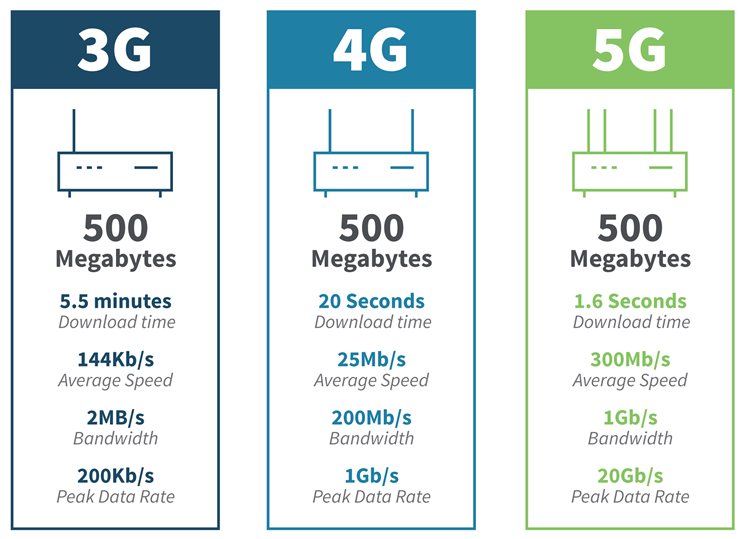
Approximately every decade the Radiocommunication Sector of the International Telecommunications Union (ITU-R) and its partners define a new generation of requirements for speed, connectivity and spectrum for the worldwide mobile communication systems. Older generations of technology are retired or sunsetted periodically so that more data can be carried over the same spectrum and more devices can share the available spectrum.
The ITU-R standards reflect advances in technology and timelines for their adoption are established to meet new application and industry needs. Another organization called the 3rd Generation Partnership Project (3GPP) takes the ITU-R requirements and writes technical specifications that are bundled into a series of releases.
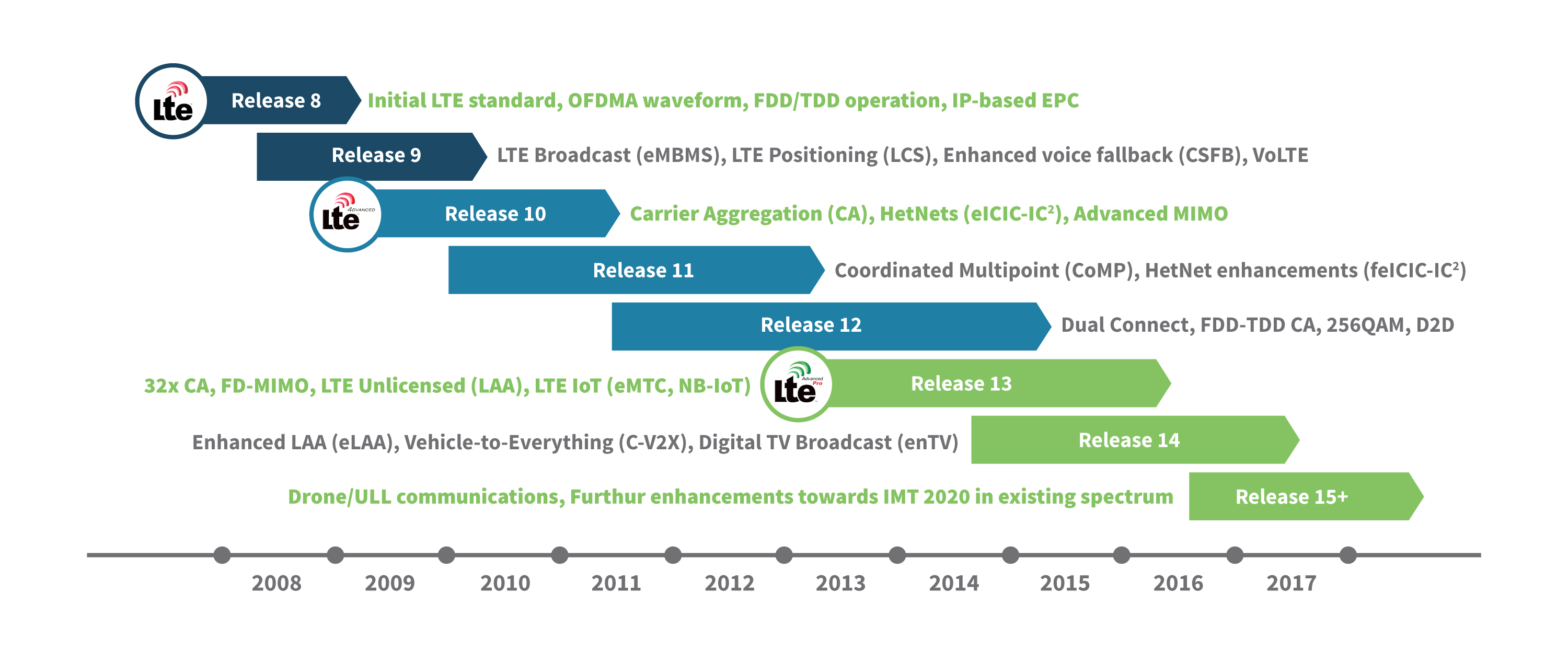
Timeline of releases by 3GPP shows key milestones in the evolution of LTE technology. Source: Qualcomm
Here is a brief chronology of key LTE development milestones and related LTE technology:
- 3G was introduced in 1998 and could be considered the technological baseline for LTE, as LTE specifically refers to performance capabilities that exceed 3G. 3G was the first technology with data speeds in the Mbps range.
- 4G speed and connection standards were set by the ITU-R in March 2008. The 4G standard for mobile, including smartphones and tablets, specified that any product or service calling itself 4G needed to have connection speeds with a peak of at least 100 Mbps, and at least 1 Gigabit per second (Gbps) for stationary uses. However, when the standards were first set, those speeds were not yet possible. In response, the ITU-R allowed products and technology to be labeled “4G LTE” if they provided a substantial improvement over 3G technology.
- LTE Advanced (LTE-A) is an enhanced version of LTE that offers faster speeds and greater stability than normal LTE, but is still not as fast as “true” 4G. It was standardized in 2011. LTE-A achieves higher speeds by aggregating channels, so users can download data from multiple sources at the same time.
- LTE Advanced Pro (LTE-AP) specifications were released in 2016 and 2017. LTE Advanced Pro includes three major technical innovations: 1) carrier aggregation, which uses spectrum from different LTE carrier bands, 2) Higher-order modulation, which uses available spectrum more efficiently by carrying more data bits, and 3) multiple input-multiple output (MIMO) antennas, which transmit and receive data in parallel at higher speeds. MIMO technology improves network coverage and throughput, particularly in urban areas. Gigabit-class LTE, a form of LTE Advanced Pro, is theoretically capable of download speeds exceeding 1 Gbps, although most users will not experience speeds that fast. Gigabit-class LTE is an attractive choice for applications in retail, transportation and other industries that need high-speed, high-bandwidth solutions.
- 5G is the newest standard, released in 2019 and 2020. 5G is now rolling out around the world. When fully implemented, 5G networks will offer speeds of up to 10 Gbps, plus lower latency, lower power requirements and virtually unlimited data capacity.
Many users ask: Is LTE the same as 5G?
The answer is no. The following table provides a succinct view of the differences.
| Feature |
LTE (4G LTE) |
5G |
| Speed |
Up to 100+ Mbps |
Up to multi-gigabit |
| Latency |
20–50 ms |
As low as 1 ms |
| Coverage |
Extensive global coverage |
Expanding, not universal |
| Device ecosystem |
Mature and widespread |
Growing rapidly |
LTE is not one single configuration. Several LTE variants support different use cases:
LTE Cat 1
- Ideal for IoT and M2M applications
- Balanced performance and power efficiency
LTE Cat 4
- Higher throughput for routers and gateways
LTE-M (Cat-M1)
- Low power LTE designed for IoT
- Supports mobility and voice
NB-IoT
- Narrowband LTE optimized for low data rates and extended coverage
These LTE technologies enable scalable deployments across industries.
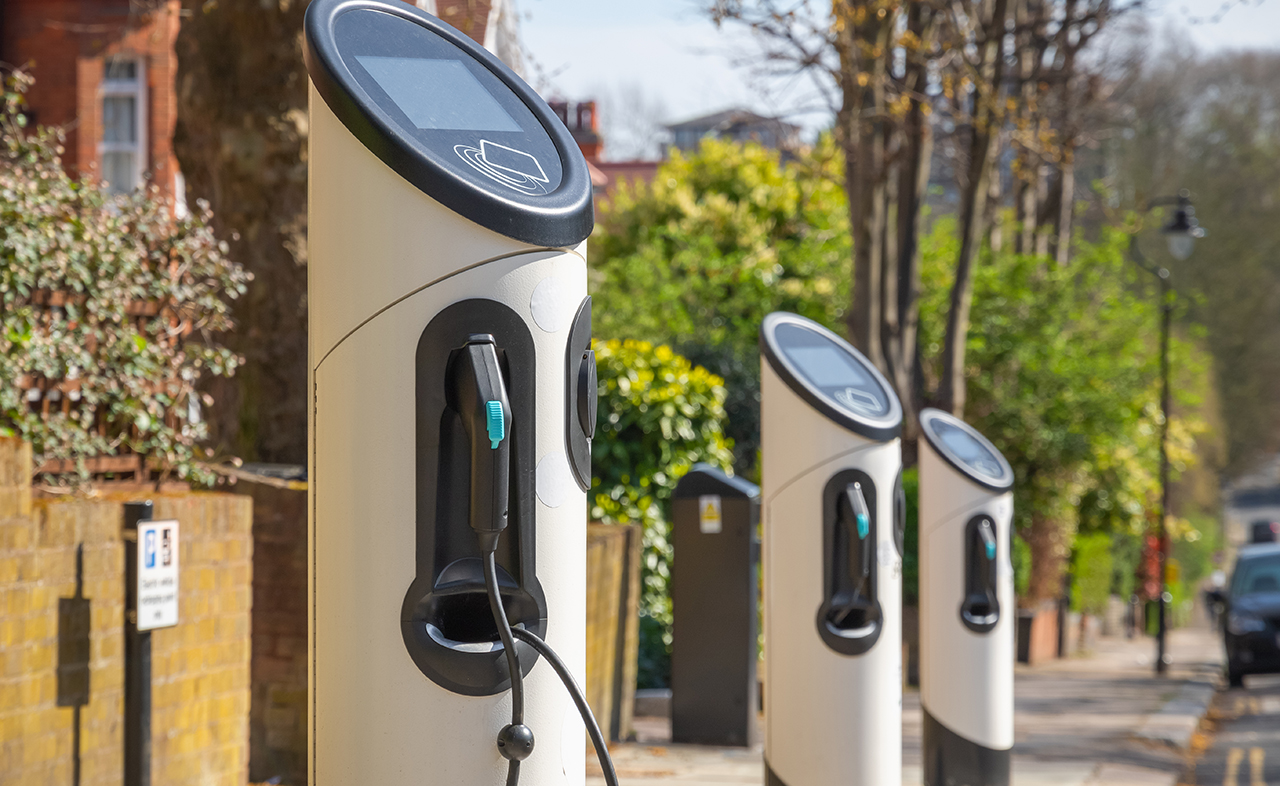
LTE networks are used heavily by Internet of Things (IoT) solutions to connect machinery and equipment and enable them to send and receive data. While the IoT existed before the introduction of LTE-level connectivity, the higher speed and throughput of LTE made it possible for IoT systems to control larger and more complex systems with greater precision.
IoT solutions are used in virtually all industries. The following are some of the most widely deployed examples of LTE-enabled IoT:
- Transit: Buses, commuter rail and other forms of public transit depend on LTE data and connectivity to provide information to dispatchers and system administrators on vehicle performance, ridership levels and for passenger Wi-Fi.
- Smart Cities: Numerous IoT applications using LTE provide cost efficient functionality for municipalities, including intelligent lighting controllers for streets and public spaces, electric vehicle charging stations, and high-speed LTE networks to connect traffic signals for real-time adaptive traffic management
- Industrial applications: IoT plays a major role in factory and industrial operations, including process monitoring and control, manufacturing automation and predictive maintenance.
- Precision agriculture: Irrigation systems and other agricultural infrastructure facilitated by LTE can provide significant labor and cost savings for farmers.
- Water/wastewater management: IoT applications with LTE connectivity provide 24/7 wireless monitoring for wells, lift stations, sewers and other components of water and wastewater systems.
- Retail and digital signage: IoT solutions for retail applications and digital signage are used in variety of use cases, from informational signage and outdoor advertising to point-of-sale systems, ATMs, self-service checkout systems and more.

Why LTE Is Essential for Industrial IoT
LTE connectivity is widely used in:
Compared to Wi-Fi, LTE networks provide:
- Wide-area coverage
- Carrier-grade security
- Redundant failover options
- Mobility support
For mission-critical applications, LTE routers and LTE gateways provide secure, resilient connectivity across distributed environments.
Why LTE Still Matters in a 5G World
Even as 5G expands, LTE technology remains critical because:
- LTE networks have broader global coverage
- LTE infrastructure is mature and cost-effective
- Many IoT devices rely on LTE connectivity
- LTE provides stable, predictable performance
In fact, many 5G networks depend on LTE for non-standalone (NSA) operation.
Security is a major strength of LTE technology.
An LTE network includes:
- SIM-based authentication
- Encrypted data transmission
- Secure IP tunneling
- Network-level access control
For enterprise and industrial applications, LTE provides stronger inherent security than many public wireless alternatives.
How Long Will LTE Be Around?
One common question is:
Is LTE going away?
No. LTE will remain operational for many years.
Carriers worldwide continue investing in LTE infrastructure. For IoT deployments with long device lifecycles (10–15 years), LTE remains a reliable, future-proof cellular option.
Many industry analysts expect LTE networks to coexist with 5G well into the 2030s.
The Future of LTE Connectivity
LTE continues evolving alongside 5G. These technologies ensure LTE remains central to global connectivity strategies:
- LTE Advanced
- LTE-M
- Private LTE networks
- Hybrid LTE/5G deployments
For organizations deploying IoT devices, industrial routers, or remote monitoring systems, LTE offers:
- Global coverage
- Mature ecosystem
- Cost-effective deployment
- Proven reliability
Learn more in these related articles:

How LTE Supports the Rollout of 5G Networks
LTE connectivity remains essential to the global rollout of 5G networks. Rather than replacing LTE immediately, 5G is being layered on top of existing 4G LTE infrastructure. As a result, LTE and 5G networks will coexist for many years, with LTE continuing to provide foundational coverage, control signaling, and fallback connectivity.
In areas where 5G coverage is limited or inconsistent, 4G LTE networks provide seamless fallback connectivity, ensuring devices stay online. For many enterprise and IoT applications, LTE connectivity also remains more cost-effective and widely available than 5G.
Why LTE and 5G Will Coexist for the Long Term
Several factors ensure continued LTE relevance:
-
Infrastructure investment: LTE networks are already fully deployed worldwide.
-
Device ecosystem maturity: Billions of LTE devices remain in operation.
-
Cost efficiency: LTE modules and LTE routers are often more affordable than 5G hardware.
-
Coverage footprint: LTE provides broader geographic coverage in many regions.
-
IoT lifecycle needs: Many industrial IoT devices require 10–15 year deployment lifecycles.
For these reasons, LTE connectivity is expected to coexist with 5G well into the 2030s.
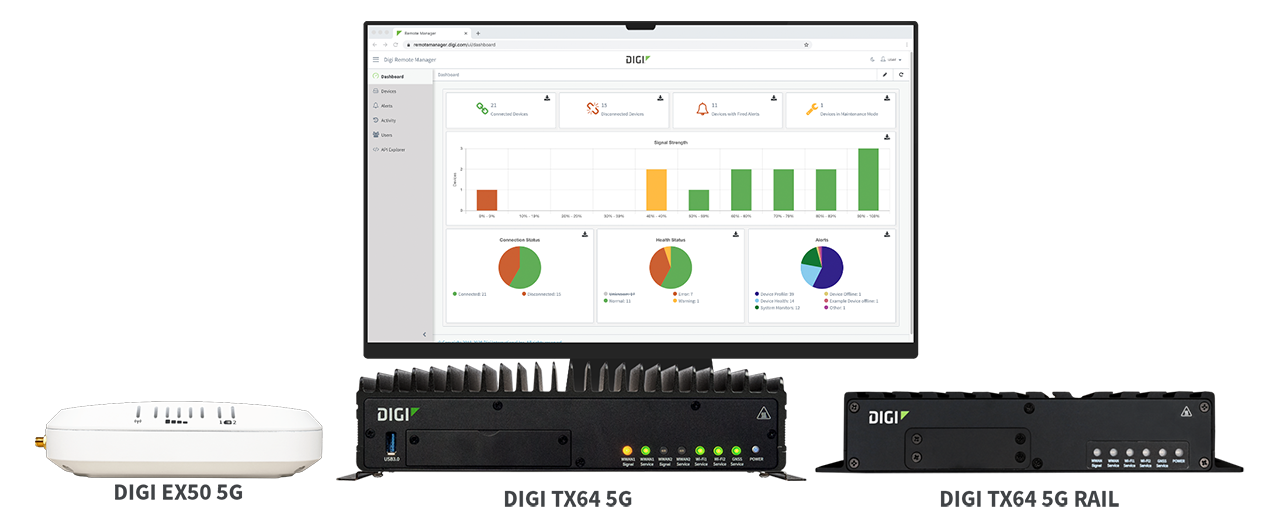
Digi LTE and 5G Solutions to Future-Proof Your IoT Deployments
LTE is a key stepping-stone in the development of wireless connectivity, for consumers as well as for commercial and industrial applications. Even as industries and IoT developers discover the extraordinary possibilities presented by 5G, it’s reassuring to know that LTE technology provides a proven — and often lower cost — bridge to that future.
Digi offers complete cellular solutions using 4G LTE, LTE Advanced and 5G technologies to support your organization in future proofing your deployment of connected devices, with robust, integrated security, sophisticated software, and industry-leading cloud and edge management tools.
Need support for your migration to new technology? Learn about LTE and 5G Migration Solutions. Digi can support any aspect of your project as you prepare your organization for the sunset of 2G and 3G networks and for the world of LTE, 5G and beyond.
Get Our Solution Brief
Learn about next-generation 5G connectivity solutions
Download PDF
Conclusion: LTE Remains the Foundation of Cellular Connectivity
LTE (Long Term Evolution) transformed mobile broadband and continues to power billions of connected devices worldwide. While 5G expands new capabilities, LTE networks remain the backbone of 4G connectivity across industries.
Whether supporting consumer smartphones or industrial IoT infrastructure, LTE technology provides secure, scalable, and reliable wireless communication.
For organizations planning long-term deployments, LTE connectivity remains a strategic and dependable choice.
What is LTE in simple terms?
LTE is a 4G wireless technology that delivers fast mobile internet using advanced radio systems and IP networking.
What does LTE stand for?
LTE stands for Long Term Evolution, a wireless communication standard developed by 3GPP to improve mobile broadband performance beyond 3G networks.
Is LTE the same as 4G?
LTE is the technology that powers most 4G LTE networks. While early LTE deployments did not fully meet official 4G speed standards, LTE Advanced later achieved true 4G performance. Today, the terms LTE and 4G LTE are commonly used interchangeably.
What is LTE Advanced?
LTE Advanced (LTE-A) is an enhanced version of LTE that increases LTE speeds and network capacity through carrier aggregation, higher-order MIMO, and improved signal processing.
LTE Advanced delivers faster performance while maintaining compatibility with existing LTE networks.
What is LTE-M?
LTE-M (Cat-M1) is a low-power LTE technology designed specifically for IoT applications. LTE-M supports mobility, voice capability, and extended coverage, making it ideal for connected devices that require long battery life.
What is NB-IoT?
NB-IoT (Narrowband IoT) is a low-bandwidth LTE-based technology optimized for small data transmissions and deep indoor coverage. NB-IoT is commonly used for smart meters, environmental sensors, and remote monitoring systems.
Is LTE faster than 3G?
Yes. LTE speeds are significantly faster than 3G and offer lower latency.
Is LTE slower than 5G?
Yes, LTE is slower than 5G but LTE performance is still sufficient for many IoT, enterprise, and mobile applications.
Is LTE Secure?
Yes. LTE networks include built-in security features such as:
- SIM-based authentication
- Encrypted data transmission
- Secure IP connectivity
- Network-level access control
For enterprise and industrial deployments, LTE connectivity offers strong carrier-grade security.
Does LTE require special devices?
To utilize LTE networks, devices must include an LTE modem or LTE module compatible with carrier frequency bands.
What devices use LTE technology?
Devices that use LTE include:
- Smartphones and tablets
- LTE routers and gateways
- Industrial IoT devices
- Fleet tracking systems
- Medical monitoring equipment
- Smart city infrastructure
Any device with an LTE modem can connect to an LTE network.
How long with LTE be available?
LTE is expected to remain active for many years. Carriers continue investing in LTE infrastructure, and LTE networks will coexist with 5G well into the 2030s, especially for IoT and industrial applications.
Why is LTE important for IoT and industrial applications?
LTE connectivity is essential for IoT because it provides:
- Wide-area cellular coverage
- Reliable network performance
- Secure data transmission
- Mobility support
- Long device lifecycle compatibility
For industrial environments, LTE technology enables remote monitoring, asset tracking, smart infrastructure, and mission-critical communications.
Next Steps
Editorial note: This blog post was first published in November of 2021 and was updated in February of 2026.